Customer Care:- 08045816650


 English
 Spanish
 French
 German
 Italian
 Chinese (Simplified)
 Japanese
 Korean
 Arabic
 Portuguese

 Send Inquiry
Mechanical Seal Bellows
Price 1000 INR/ Piece
MOQ : 15 Pieces
Mechanical Seal Bellows Specification
- Tolerance
- 0.05 mm
- Hardness
- 60-80 Shore A
- Feature
- Corrosion Resistant, Flexible, Easy Installation
- Material
- SS
- Style
- Mechanical Seal
- Shape
- Any
- Temperature
- -20C to +180C
- Application
- Pumps, Compressors, Agitators
- Service Life
- Long
- Rotation Capability
- Bi-directional
- Standard
- DIN, ISO, API
- Leakage Rate
- 0.05 ml/h
- Shaft Diameter
- 12 mm to 100 mm
- Spring Type
- Single Coil / Multi Coil
- Finish
- Polished
- Pressure Range
- Up to 20 bar
- Seat Type
- Rubber / Resin / Ceramic
- Seal Face
- Carbon, Silicon Carbide, Ceramic
Mechanical Seal Bellows Trade Information
- Minimum Order Quantity
- 15 Pieces
- FOB Port
- Vadodara - Gujarat
- Payment Terms
- Cash Advance (CA), Cash in Advance (CID), Cheque
- Supply Ability
- 1000 Pieces Per Month
- Delivery Time
- 30 Days
- Sample Available
- No
- Sample Policy
- Contact us for information regarding our sample policy
- Packaging Details
- Standard Packaging
- Main Export Market(s)
- Asia, Australia, Central America, North America, South America, Eastern Europe, Western Europe, Middle East, Africa
- Main Domestic Market
- Gujarat, Tamil Nadu, Tripura, West Bengal, Uttar Pradesh, Himachal Pradesh, Madhya Pradesh, Maharashtra, Pondicherry, Sikkim, Jammu and Kashmir, Nagaland, Telangana, Uttarakhand, Rajasthan, Assam, Andhra Pradesh, All India, Odisha, Goa, Meghalaya, Punjab, Karnataka, Bihar, Kerala, Daman and Diu, Delhi, South India, Mizoram, Dadra and Nagar Haveli, Chhattisgarh, Haryana, Jharkhand, West India, Central India, Manipur, Lakshadweep, Arunachal Pradesh, Chandigarh, East India, Andaman and Nicobar Islands, North India
- Certifications
- ISO 9001:2008
About Mechanical Seal Bellows
Mechanical Bellow Seals
Blessed and supported by the team of high skilled and talented personnel, our company is considered as one of the leading manufacturers and exporters of Mechanical Bellow Seals. Widely accredited for its excellent quality and durability, our gamut of bellows is made in compliance with the national and international standards. We are offering these supreme quality Mechanical Bellow Seals to our clients in varied technical specifications and that too at competitive prices.
Specification
|
Usage/Application |
Structure Pipe |
|
Size |
1/2 inch |
|
Material |
SS |
|
Brand |
SEJB |
|
Packing Type |
Corrugated Box |
|
Surface Finishing |
Polished |
Mechanical seal bellows is a flexible component used in mechanical seals to maintain sealing force and allow movement between rotating and stationary parts in equipment such as pumps mixers and compressors.
Function
A mechanical seal bellows provides axial flexibility to compensate for shaft movement misalignment and thermal expansion. It maintains the closing force on the seal faces and prevents fluid leakage along the shaft. In many designs it replaces conventional springs.
Types of bellows used in mechanical seals
-
Metal bellows
Metal bellows are made from materials such as stainless steel Hastelloy or Inconel. They are suitable for high temperature high pressure and corrosive applications. They do not clog which makes them ideal for dirty or viscous fluids. These bellows are commonly used in chemical plants refineries and power industries. -
Elastomer or rubber bellows
Elastomer bellows are made from materials like NBR EPDM Viton or PTFE. They are used in general purpose pumps and offer good flexibility at a lower cost. However they have limitations in temperature and chemical resistance compared to metal bellows.
Bellows seal compared to spring loaded seal
Bellows seals do not use springs so there is no risk of spring clogging. They perform better in dirty or high temperature services. Spring loaded seals are usually less expensive and are better suited for clean fluids and moderate temperatures.
Common applications
Mechanical seal bellows are used in centrifugal pumps chemical processing equipment hot oil systems thermal fluid systems vacuum service and cryogenic applications.
Advantages
They provide uniform seal face loading excellent leakage control and high reliability in severe operating conditions.
If you need information on design calculation failure modes selection guidelines or welded versus formed bellows I can explain that as well.
Precise Engineering and Superior Compatibility
Our mechanical seal bellows are meticulously engineered to fit shaft diameters ranging between 12 mm and 100 mm, ensuring seamless adaptability to a wide array of pumps, compressors, and agitators. The use of single or multi-coil springs and customizable seat and seal face materials, including rubber, resin, carbon, and ceramic, helps guarantee perfect compatibility with customer specifications. This flexibility allows installation in both new systems and retrofits for existing equipment.
Outstanding Performance and Extended Service Life
Experience the advantage of a polished finish and advanced material selection, such as stainless steel bellows with a 60-80 Shore A hardness. Engineered for long service life, these mechanical seals provide minimal leakage rates of only 0.05 ml/h, ensuring exceptional sealing performance even under demanding industrial conditions. Their corrosion resistance and bi-directional rotation capability offer robust protection for critical machinery.
Reliable Solutions Backed by Standards
Every mechanical seal bellow complies with stringent international standards, including DIN, ISO, and API. This commitment to quality assures customers of reliable, high-performance sealing solutions. Our products are tailored to withstand temperatures from -20C to +180C and are distributed, exported, and supported across India, ensuring consistent availability and superior after-sales service.
FAQ's of Mechanical Seal Bellows:
Q: How are mechanical seal bellows installed in pumps and compressors?
A: Mechanical seal bellows are engineered for easy installation. Their flexible and standardized design allows them to be fitted directly onto compatible shafts with diameters from 12 mm to 100 mm. Installation is straightforward and requires minimal adjustment, thanks to their bi-directional rotation capability and selection of seat types.Q: What benefits do single coil and multi coil spring types provide?
A: Single coil springs are optimal for standard pressure applications, offering reliable tension and consistent force. Multi coil springs enhance operational stability, especially under fluctuating loads, and improve the seal's adaptability and service life under up to 20 bar of pressure.Q: When should I choose rubber, resin, or ceramic seat types?
A: Choose rubber seats for excellent flexibility and chemical resistance in less abrasive environments. Resin seats are ideal for slightly aggressive media, balancing strength and resilience. Ceramic seats are recommended for highly abrasive or high-temperature conditions, offering maximum durability and minimal wear.Q: Where can these mechanical seal bellows be used?
A: These bellows are suitable for a wide range of industrial equipment, including pumps, agitators, and compressors, operating across chemical, pharmaceutical, water treatment, and process industries. Their corrosion-resistant properties make them ideal for both indoor and outdoor installations in demanding environments.Q: What is the process for selecting the correct seal face material?
A: Selection depends on factors such as the fluid's abrasiveness and temperature. Carbon faces are used for general-purpose applications, silicon carbide provides superior hardness for abrasive fluids, and ceramic is chosen for high-temperature or highly corrosive environments. Our expert support team can guide you through the selection process.Q: How can I benefit from the low leakage rate of 0.05 ml/h?
A: A low leakage rate ensures maximum containment of process fluids, reducing safety risks and environmental impact. This helps maintain system integrity, lowers maintenance costs, and extends the service life of the mechanical seal.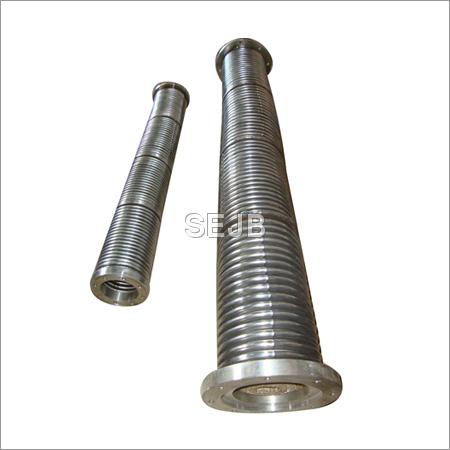
Tell us about your requirement

Price:
Quantity
Select Unit
- 50
- 100
- 200
- 250
- 500
- 1000+
Additional detail
Mobile number
Email

More Products in Bellow Seals Category
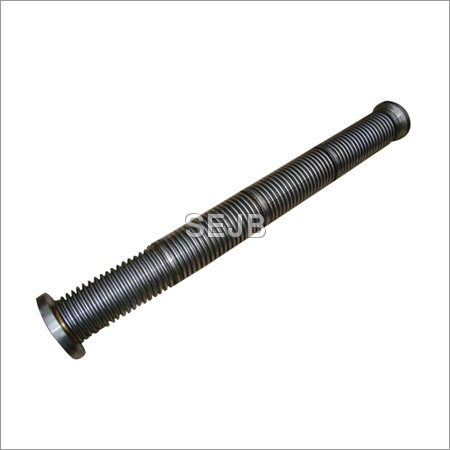
Metal Bellows Seal
Price 500 INR / Piece
Minimum Order Quantity : 10 Sets
Style : Bellow Seal
Material : SS
Shape : Any

SHAH EXPANSION JOINTS (BELLOWS) MANUFACTURERS
GST : 24ADXFS1204Q1ZI
GST : 24ADXFS1204Q1ZI

- 484/B-6, Makarpura GIDC, B/H, Biotor Industries, Vadodara - 390010, Gujarat, India
- Send Inquiry
 Send Inquiry
- Phone : 08045816650
- Mr Swetang Shah (Director (Marketing))
- Mobile :08045816650
|


SHAH EXPANSION JOINTS (BELLOWS) MANUFACTURERS
All Rights Reserved.(Terms of Use)
Developed and Managed by Infocom Network Private Limited.
Developed and Managed by Infocom Network Private Limited.

